-->

Nashe Kelz

Blogger

Mix and Mastering

Graphic Design

App Development

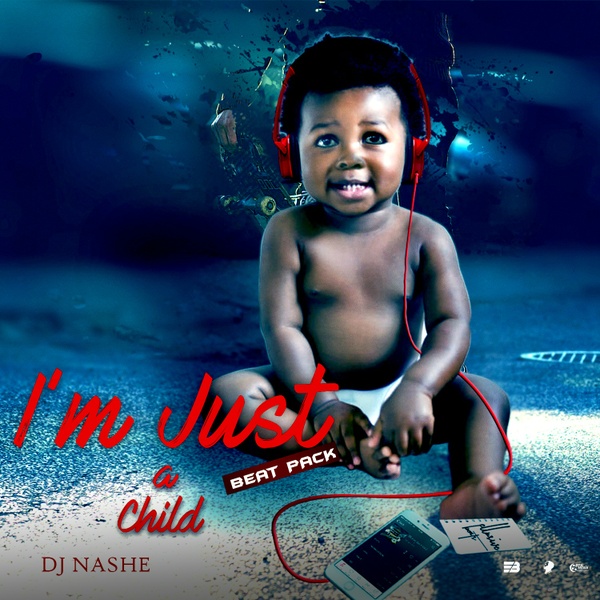
  • Its Finally Here!!! I'm Just A Child [Beat Pack]

    I'm Just A Child [Beat Pack]

    As promised, here is the  BEAT PACK with  16 ðŸ”¥ super dope beats ðŸ”¥

    Track list
    1. Im Just A Child
    2. Nice & Slow
    3. Bossing
    4. 4 ya
    5. Emotional
    6. Emotional 2
    7. Gold Stars
    8. Avalon
    9. Over  You ( free Style )
    10.  Good Bye
    11. The Struggle
    12, Choices
    13. From Mind

    Bonus
    14, Holy Sunday
    15. Crazy Feeling
    16. The Way
    --. needed you


  • BEAT MAKING TIPS (part 2)


    This is the ultimate question when dealing with Hip Hop production. For years sampling was the way that beats were made, from the beginning all the way through the 1990s when Hip Hop was at its creative peak. Then synthesizers came into the picture and now we're at the point where Trap beats are the most popular style.

    Synthesizers have been around long before Hip Hop's popularity, but it wasn't until the late 1990s that they were incorporated into mainstream beats.

    Both samples and synths have their advantages and disadvantages, so let's get into it:

    Sampling

    Hip Hop first started out with deejays using the breaks in popular (and some obscure) songs, which is a form of sampling. As Rap music grew, it was the producers that took center stage by incorporating many breakbeats into their beats, often making the breaks be the backbone of the beat.

    There is a whole legal side to sampling, but I won't get into that aspect. What I will say is that sampling, if done right, can make your beat sound amazing. There are times when I'm trying to play a piano melody with a VST plug-in but I just can't get it to sound good, so I'll sample piano instead. What a difference!

    The advantage of sampling is that you can sample anything. Of course, some samples are better than others, but if you know how to chop, truncate, and filter a sample, the possibilities seem endless.

    The disadvantage of sampling is mainly the legal side of it. If you want to sell your beats or if you're making a beat for an artist and you have samples in your beat, then legally you must get permission (clearance) to use that sample. This means you must pay to use that sample.

    Synths

    If you don't want to sample and would rather use synth sounds, then you have an open canvas. No matter what virtual instrument you use, there's no need to have anything cleared, so legal issues are non-existent.

    The advantage of synths is that you have hundreds or even thousands of sounds at your disposal and you can just create whatever you want.

    The disadvantage is that even though synths sound great, they often don't capture that true Hip Hop sound. For some, this doesn't matter, as they just prefer to use synths, but no matter how many synths you use, your beat will never sound the same as a sample-based beat. A lot of it is due to the fact that synth sounds are "clean" as opposed to samples that have a "dirty" sound to them.

    Mixing Is Very Important

    The mixing process is a very important one. I wrote this article about mixing, which explains the best way to get a great mix. It still requires a lot of practice tho, your mixes will sound great.

    Breakbeats are your friends.

    What is a breakbeat? It's a drum loop with / without other instruments, that you can loop. Most of the time breaks are taken as samples from various songs, like if a Rock band had a drum solo. A drum solo can be used as is, or just a small portion of it can have a really great pattern that would sound dope on a Hip Hop track.

    However, you can also use breakbeats as a guide as well.
    Now let's say that you absolutely want to do your own drum pattern. That's great, but what if you just can't come up with something good? Then you can just use a breakbeat to guide you.

    Here's how:

    In your DAW, you would have your own drum pattern loaded up, and then you load up the breakbeat on another track. Now when you go to record your pattern, do so while listening to the breakbeat, and follow it. It won't sound exactly the same, but at least your pattern will sound similar, and the actual drum sounds will be the only thing that's different. This is a great way to learn how to do patterns.

    What I just described is what's called a "reference track". It's a track that you use as a reference, or a guide. It could be a breakbeat, or a full song. It's a technique that can really help you build up your beat until it is complete.

    Filtering

    A common technique that I used all the time is filtering. It can be used whether you are using samples or synths, and it will give you great results.

    What is filtering? Filtering is when you alter a sound's EQ (equalizer) to fit better in your mix. You can filter at the mixing stage, or as you are creating a beat.

    Now let's say you have a sample and want to use it in your beat. You can use it as is, but since it's a sample; it will be loud and possibly noisy, which will clash with your other tracks. So in this case what you would do is filter it, most likely with a High Pass filter. The most common filters are High Pass and Low Pass. All you have to remember is High Pass gives you more "highs" and Low Pass gives you more "lows".

    Many times this is what I will do:
      • I will copy the sample so I have two of the same.
      • I will apply a high pass to one of them, and low pass to the other.
      • The high pass filtered sample will be my main track, and the low pass filtered sample will be my low-end (bassline).
    Just by doing this, it gives you a great sounding beat because you can use it like this, which is basically adding substance to your sample because of the low pass filter, but you can also mute the high pass sample for the verse of the beat, leaving just the low pass sample, which is your bassline.

    So think about that - you just created a beat where you can easily have a chorus and verse. The chorus will contain both versions of the sample, and the verse has just the low pass sample, so it's the bassline but you still hear a bit of the sample's tune.

    Effects Plug-Ins Are Great, But Use Them Sparingly

    Everyone seems to love three effects the most: reverb, delay, and compression. They're all great but they must be used as needed, and not all the time.

    Reverb is great for certain instruments, and especially vocals. I often use a bit of reverb on my drum snare because it gives it some space and makes it sound "roomy". Delay is also great on samples that are too short and need to fill out some space. And compression is very good but is most likely needed in your mix, rather than in your beatmaking process. It can make certain instruments sound much better, but is often overused.

    Always remember to try and get the best sound you can from your beat, without using effects. Once you have a beat that sounds great without effects, then you can add some here and there as needed (but you probably won't want to use much anyway since the beat sounds great already, right?).

    Keep It Simple

    The one thing that I always try to stress to anyone making beats is to keep it simple. This also includes the terms "less is more" because it can make or break your beat.

    Whenever you are making a beat, you will want to build it up until it sounds like it's complete, but sometimes things can get out of hand. You may have too many instruments, so you have a couple of options:
    1.       Remove certain instruments.
    2.       Mix the beat.

    You could easily remove certain instruments, but maybe you want to keep them because they sound great, so that's when you need to make sure the beat is mixed properly. Not necessarily at the mixing stage, but as you are making the beat. All you have to do is make sure that each track is below the red level (clipping), and then decide which instruments you want to have more prominent and which ones should be more in the background at a lower volume.

    One of the best pieces of advice I ever received was "always take away, never add". As long as you keep it simple, you won't have any problems with your beat at the mixing stage.

    My Finals Tips For You

    No matter if it's hardware or software, always read the manual because it contains all the information you need to get started. Too many times I see people posting on websites asking how to do this or how to do that, when all they need to do is read the manual.

    Granted, sometimes the manual does not cover every little trick and feature, but for the basics, you should be covered.

    Last but not least, do what comes naturally. I wrote an article about leading the way and not following the rest and I think if all beatmakers and producers were to follow my advice, we could seriously change the sound of Hip Hop as we know it. Stop following and start leading!

    OUTRO

    There are many more topics about beatmaking, but the ones I have explained in this guide will surely get you started on making beats or inspired you to make changes to your current workflow.
  • How To Mix And Master Your Beat


    Mastering can be quite a confusing. Even with a couple years of experience, mastering is still confusing.

    Now, let us get this out of the way.
    Mixing, and Mastering, are two different skills. They both need each other tho, but they are 100% separate.
    What’s the difference? …. I know u asking that, let me answer you.

    What Is Mixing?
    When beginning to learn mixing, I didn’t know what goal I wanted to reach, what tools to use, or even what certain plugins did.
    Thankfully, this didn’t stop me. It kept pushing me to want to learn more about the tools and what they did.

    Learn Your Tools, Especially Compresion And EQ,

    Learning how to use your plugins for example, compression and EQ are very important in the process of mixing. They allow you to either make a sound stand out or fit in to the beat.
    Mixing is definitely a process that takes time to learn, and you will only get better with practice! And I’m warning you now, save your original file/song first, before you attempt mixing. I totally wrecked a few beats here and there in the beginning ;). As you go on, you’ll learn, many times, less is more in the mixing and mastering stage (especially mastering).
    And definitely get a good grasp on mixing before you start attempting mastering otherwise it’s just too much coming at you at once.
    Mixing
    How I start off mixing is, I make the beat, not worrying about mixing, then after the beat is done, I assign them all a mixer channel so I can now adjust volumes. During the mixing stage is where I usually create all my bring-ins for the chorus, verses, bridge etc. In other words, I arrange at the same time as mix.

    Steps To Mixing,

    Here’s some quick steps on how to achieve a faster mix:
    Assign each sound to an individual mixer track
    Group instruments / sounds into sub busses
    Adjust your volumes first — Is anything not standing out, or, can you improve a certain area of the beat?
    When using plugins such as compression and EQ, ALWAYS compare before and after with an even volume. (Otherwise, the louder sounds better!).
    When you feel the mix is done, hit stop, hit play, and walk away and listen. In other words, start the beat from the beginning, and listen all the way through. (Does it sound complete?)
    What’s The Difference, Mixing And Mastering?
    Mixing, as described above, makes everything sound clear, balanced, and sit in it’s own spot. You do this by adjusted the individual mixers tracks volume, panning sounds to the left or right speaker, or applying EQ/compression and other effects like delay, reverb, chorus, distortion etc.
    Mastering just amplifies what you already have. Mastering makes your track crisper, sharper, louder, and adds the final touches on your song/beat with techniques such as mid/side EQ, parallel compression, an amazing listening environment with expensive acoustic treatment, and invaluable ears of experience.
     So now once you have your song mixed, it sounds great, and is under -3dB, you now want to amplify your mix to compete with other commercial releases! You do this in a process called mastering. Don’t get me wrong, that’s not all that goes into mastering, but, it’s a big part of it!

    Tools Needed In Mastering

    You will use tools like an EQ, compressor, maybe a multiband compressor, clipper, and then you bring out the limiter.
    Surprisingly, this chain can bring real professional results. It all comes down to taste, and experience.
    By chain, what people mean is, “In what order, do you place your effects on your final master channel?”. Do you place an EQ, compressor, EQ, Clipper, Limiter? Or, what about a gain boost, Multiband Compressor, EQ, Limiter?
    It can be as simple as 2 plugins, 3 plugins, 8 plugins. It depends on the beat, your experience in the industry knowing how the tools work, and if they will benefit the song, or again, many times less can be more!

    Always Put Limiter Last!

    The limiter is always last of your plugins, and you always want the meter last to get accurate readings of what’s going on in your beat.
    Mastering takes a lot of trial and error. It requires mastering the track, listening to it in different speaker systems, and after a couple of years of experience, you start to realize what works, and what doesn’t. You will gain an ear of too much compression, and what it’s actually doing!
    Mixing, and mastering BOTH take a very long time to grasp, learn, and understand the little tricks to keep your mixes strong, loud, and powerful.

    Mixing And Mastering — Final Thoughts,

    Remember, save the beat as a new file when attempting to mix it. Something such as Beat Name (Mixed). You can also do the same for mastering, but I’ll break that down in a moment.
    This way you will stay super organized, and always have the original file!
  • How To Get Your Kick And Bass Play Nice


    Drums and bass play a very important part in Hip Hop production, as it is the foundation of what makes our beats sound great. However, many times there are drum kicks that just don't sound right, and a lot of that is because it doesn't blend well with the bass notes. Here's how to fix that.

    The Kick Drum

    The best way to get your kick drum to sound better is to mess around with the EQ. A lot of times, producers tend to apply compression to the drums as soon as possible, but compression is something that should be used sparingly. What you have to remember is that the kick drum is also known as the bass drum. So think about that for a second - the bass drum. That should tell you that the kick drum SHOULD go in unison with the bass, as it's so closely related.

    When processing with EQ, the main frequency range you will want to mess with is from 60Hz to 150 Hz. Boosting the 60-80 Hz range is where the kick will really thump, if that's what you're looking for, and cutting around 150 Hz will give you a classic EQ for a kick drum. Then, boosting the highs around the 3 kHz range will add some clarity to the kick so it won't sound muddy along with the bass.

    The Bassline

    This is where it can become tricky, but it doesn't have to be. When you EQ the bassline, you're basically going to do the opposite of what you did with the kick. Cut around 60-80 Hz, boost around 150 Hz, and boost the highs around 800-900 Hz. When doing this, you have to visualize it because it's much easier that way. You're taking away from the kick and substituting that range by increasing the bass notes.

    At this point, your kick and bass should sound great together, but it's not always that simple. The main thing I always see (and experience myself), is that even if you EQ properly, the kick and bass might just not sound good together.

    Make Them Fit

    A lot of producers are using the famous 808 kick drum on their tracks, and rightfully so. The 808 is super dope, and it sounds great on any beat you make since it thumps hard and acts as a bassline at the same time.

    But problems arise that don't need to. The 808 is actually not a drum sound at all, rather, it's a synthetic pulse! The attack, decay, and sustain have all been tweaked so that it sounds like a boomy kick drum, but that's not the case at all.

    So with that in mind, it should be very easy to have your 808 kick and drum kick sit well in the mix. The 808 kick is in the 20-80 Hz range, but when mixing, just use your ears and you'll be fine.
    Conclusion

    My advice is to let your ears guide you (and common sense too). A synth bass might work with an analog drum break, but it might not. If you're going to use synth bass, then use synth drums, and the same goes for analog. But once you have the right combination of kick and bass, it's really just a matter of EQing and mixing them properly until they sound dope. Good luck!
  • BEAT MAKING TIPS


    If you ever listened to a DJ doing incredible mixes between two songs, it's because they just know the song. They know where all the parts of the song are such as the verse, chorus, intro, and outro. Because of this, they know when it's the right time to start mixing in the next song and how to make the mix sound great. It's almost as if the DJ was part of the team when that song was produced.

    The reason why a DJ knows certain songs so well is because they study music. Not in the sense that they went to college to learn music, but rather they pick apart songs when they listen to them, so in a way they are essentially a student of music.

    As a beatmaker, it's very important that you do the same thing. You should know some of the classic Hip Hop tracks all the way back to the early 1980s, as well as most of the songs that were sampled over the years, like Impeach the President and Funky Drummer. Some may argue that you don't need to know all of that history, but I think you do. If you were to listen to old school Rap music and study how the producers, rappers, and deejays back then did what they did, it will open up a whole new world to you.

    If you were to look back at the 1990s of Hip Hop, you can tell that the producers at the time had a heavy influence from songs in the 1980s. The drums were hard and a lot of breakbeats were used, which is what transitioned to the 1990s style of music.

    Bars

    With Hip Hop beats, most of the time you will hear 4-bar loops. Whichever beat making program you use, just take a look and you will see a numbered grid that shows you what bar you're on. Bar counts are designed like this:1-2-3-4, 1-2-3-4, 1-2-3-4, 1-2-3-4. That's 4 bars. As you can see, there are 4 parts to each bar. It's pretty standard, but you can also extend your loop to 8, or 16, or any number you would like. If you're still not sure about how bars work in the program you're using, then check out the manual of the program, as it will most likely explain it.

    Making a Loop

    As a new student who is just beginning, you will always want to start your project first with a drum loop. The reason for this is because it allows you to get used to timing and tempo. It may seem simple to some, but there are people that have trouble staying on beat when they want to play certain instruments, such as the piano. By having a drum loop set up first, then all you have to do is follow the loop and stay on beat.

    Step Sequencing

    If you take a look at some old school drum machines, they all had a feature called Step Sequencer. It's a feature that makes it dead simple to create a loop, especially for drums. This is why I recommend you to use FL Studio as your first DAW. By using a step sequencer, all you have to do is click on where you want your drums to be on the sequencer line.
    This is how it works:
      
     As you can see, it's very simple. In this example there are 16 steps and 4 instruments: kick, clap, hat, and snare. So all you have to do is decide where you want those four instruments to be. You just have to set your tempo and then as the software loops over and over, you can place the hits wherever you wish.

    The great thing about doing it this way is that it's so easy to edit your loop, like if you want to move the position of where the instruments are.

    Don't Worry About Creating a Full Song

    A common problem with someone that is new to beat making is that they get frustrated when their beat sounds nothing like that of a popular song they know well. It could be for various reasons, but most likely one of those reasons is because they are focusing on making a full song rather than just a loop.

    When you listen to some of your favorite Hip Hop tracks, you must pick it apart and try to hear each loop that makes up the full song. Making a beat is done in stages, so that is why working on a simple loop is absolutely necessary first. Even if it's just a drum loop, at least you have a foundation for a full song or full instrumental.

    So when you first start, just create a drum loop and make it sound as good as possible. Once you do that, then you can slowly add in other instruments as you progress to a complete beat.

    Making The Beat

    When creating your beat, you must first decide what you want the final product to be. Is it going to be a beat that you sell to a rapper? Is it going to be a beat that you put together with other beats as an instrumental album?

    One of the most common mistakes I hear all the time with beat makers is that they make beats without thinking further ahead. I'm guilty of this too, but it's only natural since making beats is all about being creative and making it sound great. Beat makers aren't necessarily producers, so the beat is always the first thought, where as a producer is always worried about the overall product.

    If you want to make a beat just as an instrumental, then the sky's the limit. You can add scratching, vocal snippets, and whatever else you can think of. On the other hand, if you wish to make a beat for a rapper to record their vocals over, then you have to step back and think about how you want to approach it.

    The first thing you should do is think about open space. One of the best techniques I've ever heard was from the 1990s when beats would have a hook and then when the verse part came in, the hook part was still there, but it was filtered out. It was a common technique.
     Another technique is to simply remove certain instruments from the beat when it's time for the vocals.

    It's true that there are plenty of Hip Hop beats that had all sorts of sounds and instruments playing throughout the beat, even with the vocals on top, but it doesn't always work.

    Bass lines Are Important, But Not Always

    A very annoying step in the beat making process is that of the bass line. Let's face it - bass is not glamorous. It just sits there and thickens the beat, but if you really listen to it, it's very important. If you were to listen to some of your favorite songs but with the bass lines removed, they would sound completely different.

    I always recommend that bass lines be added to a beat, but there are times when it's just not needed, or very little. You could add an 808 kick drum to your beat, and have that play on the first kick of the first bar, and that alone would be enough.

    If you do add a bass line then the simplest way is to follow the kick, and maybe even have a higher note on the 4th bar:


    All you have to do is get the bass note to be at the same key as the lead instrument (and make sure they sound great together), then just follow the first kick of each bar. Once you do that then play around with other bass notes and see what fits and what doesn't. Be creative!play around with other bass notes and see what fits and what doesn't. Be creative!


    Continues! subscribe so that u wont miss any
  • HOW TO MAKE BEATS


    In this section, I will explain how to make beats, more my way. But you don't have to follow my ways; you can definitely get a good idea on how you can incorporate it into your own work flow. 

    For years I've always started with drums first. This allowed me to get into the right mindset and "vibe", plus it also acted as a guide as I added other instruments while the drum track was looping. It's a great way to start your beat, but it's not the only way. 
    This may seem a bit more complicated for those that are not used to it, but you can also do drums last. I know it sounds weird to some, but it all depends on what you want to do with your beat. 

    Let's say you have a sample that you want to chop up into four parts (1 part for each bar) and have it as a 4-bar loop. This can be accomplished easily since it matches up at the start of each bar. The same can be done if you're using virtual instruments, as long as you're putting the sounds at the beginning of each bar. As you keep adding parts like this, then you'll eventually have a few tracks of instruments that sound pretty much complete and all you have to do now is add the drums. 
    One trick that you can also do is use the metronome as your guide instead of the drums. All DAWs have a metronome count-in that can also be played as you are recording, which of course will help you stay on tempo. 

    The Drum Track 
    You must always remember that the drums are the backbone of your beat. Without drums, you beat wouldn't actually be a beat, rather it would be instruments just blended together. How you do those drums are very important, so make sure your drum track always sounds dope. 

    like to keep my drums simple with a kick, snare, and hat. You can add in toms and cymbals later on, but the "meat" of it is just those three drum sounds. 
    As for the pattern, it all depends on the type of beat you're trying to make. If it's a laid-back beat then of course you won't want to have your drum track be a crazy pattern, so it's best to keep it simple. Even for faster tempo beats, you don't need a busy pattern because remember this is Hip Hop. You're not making an EDM-style beat! 

    Your best bet is to always do kick-snare, kick-snare, and the hat all the way through. That's a typical drum beat with a 4/4-time signature, which is pretty much the default for most beats. You could definitely leave your drum pattern like that, but you can also just add in an extra kick here and there, as well as the snare. What's great about drums is that you can do little tricks to give it a bit more flavor. 

    Instead of just having a kick and snare, you can also add a pre-kick or pre-snare, which is the same sound but at a lower volume, and it can be thrown into your pattern wherever you feel it sounds good. Most likely they will sound great if you place them just before the main kick or snare, but it's just a matter of preference. Normally I leave my hats as a standard pattern, but they can be changed up as well with just slight variations.

    Blending Samples Together 
    A lot of the most famous Hip Hop beats of all time were put together by sampling entire loops, rather than chopping them up into individual sounds. I didn't know this when I first became a fan of Rap music but when I leant how those beats were done, I thought it was great that those producers were able to find a really good sample and use it as a full beat, but it also seemed too easy. Either way, the beats sounded great and that's why they were so popular, and really that's all that matters. 

    But a lot of beats are done with the use of one main sample, meaning that it's a sample from one source. Beatmakers will sample a certain song, chop it up and make a beat from it, but not many will take it a step further and add samples from other songs, even from other artists. 
    I try to do the same thing when I'm making a beat. I may not sample from dozens of songs, but many times I will use one main sample and then add in smaller samples from other sources, and it makes a huge difference. By doing it like this, it really changes the way the beat sounds because it's not just one sample that's being flipped, and it gives the beat a different sound altogether. 

    The same technique can be used when using virtual instruments. There are many times when I will use a synth from a Cakewalk VST plug-in such as a Rhodes piano, and then I will also use a synth from Native Instruments, like strings or a pad lead. 

    Synths and Samples as One 
    Layering various sound sources together is a great technique, but what about samples and synths together? It works, and it's a really good way to get a unique sound. 

    One trick I like to do is I have a sample as my main lead track. I can leave it like that, or I can also add a virtual instrument to compliment my lead. So what I usually do is I will load up something like piano, strings, or a pad, and just keep playing certain notes until it matches the same key as my lead sample. Once I know the proper key then all I have to do is get creative and play out a pattern. 

    The benefit of adding a synth to a sample is that it changes the way everything sounds, but it also gives the option of dropping out the sample at certain spots and have just the synth playing, just to change it up. The main thing you must remember is that the synth must be in the right key, otherwise you will have a hard time getting it to sound right. 

    Finishing It Off with The Bassline 
    Just as with the drums, sometimes I will start my bassline first, but many times I add it lasts. Basslines are tricky and many beat makers don't like doing them for obvious reasons, but I always find the best thing to do, just as with the synth I mentioned previously, is to get it in the right key. 

    The thing with basslines is that most of the time you can cheat, meaning that you don't need a fancy pattern, but just something that will fill in that low-end. You could have a base hit at the beginning of each bar and build from there, or you can play a pattern, most likely something that follows the lead instrument. 

    Let's say you have a lead instrument that has a certain pattern. All you have to do is make a bassline that follows that same pattern, but the tricky part is to get the bass to sound in tune with the lead. Once you get that right bass note, then you're good to go. You can keep the pattern the same or just alter it a bit, but the main thing is the key - it's very important.
  • Ellusive Beats Volume 2 Now Out


    I been working on a couple beats since the beginning of this year, no lie i did put a hell lot of effort on them.
    Made a lot of beats but i chose only 10 beats that i think will help most artists if not all.

    If you checked E.B.Vol.1 you'll notice a very big difference, my sounds have evolved immensely and inexplicably from being an ape straight to being a human being
    The great news about Ellusive Beats Vol. 2 is that its going absolutely for $0.00 and anyone from anywhere can get and use these beats. So y'all feel free to check out these beats and tell me what you think after you've listened to them

    So if you were thinking of making a mixtape and couldn't find beats, search no more because these beats are exactly what you're looking for.
    Download, Comment, Like and Share these beats if you like them.

  • GET A FREE BEAT

    0
    Twitter
    0
    Instagram
    0
    Facebook
    0
    Behance

    Nashe Kelz

    Nashe Kelz is a music producer, beat maker/producer, app/web developer from the H-Town (Harare, Zimbabwe). All this comes within the same individual. His work is just different from the rest he has managed to stand out of the crowd and started making something of his own for instance his beats, they're just exquisite.
    Read more.

    Me

    My Professional Skills

    Graphic Design 90%
    App Development 25%
    Producer 95%

    EMAIL

    info@nashekelz.com
    beats@nashekelz.com

    PHONE

    +263 7735 63840
    +263 7339 63435